Perspective
Winter Is Coming: Protect Your Assets Before the Economic Storm
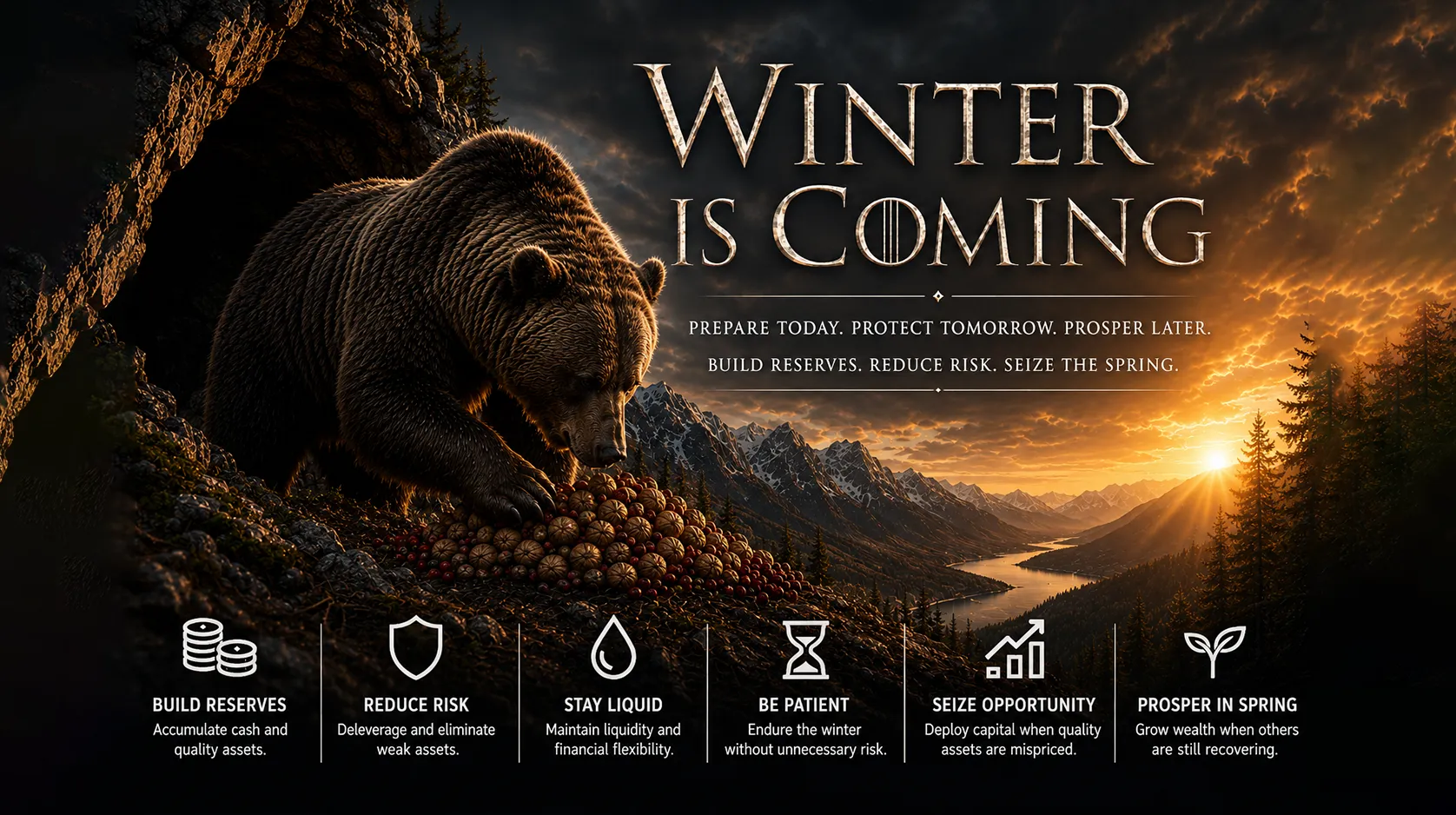
Every economic cycle eventually changes. Periods of abundant liquidity, rising asset prices and easy credit can create a false sense of security. But when interest rates rise, credit tightens and asset values fall, the same portfolio can quickly become vulnerable.
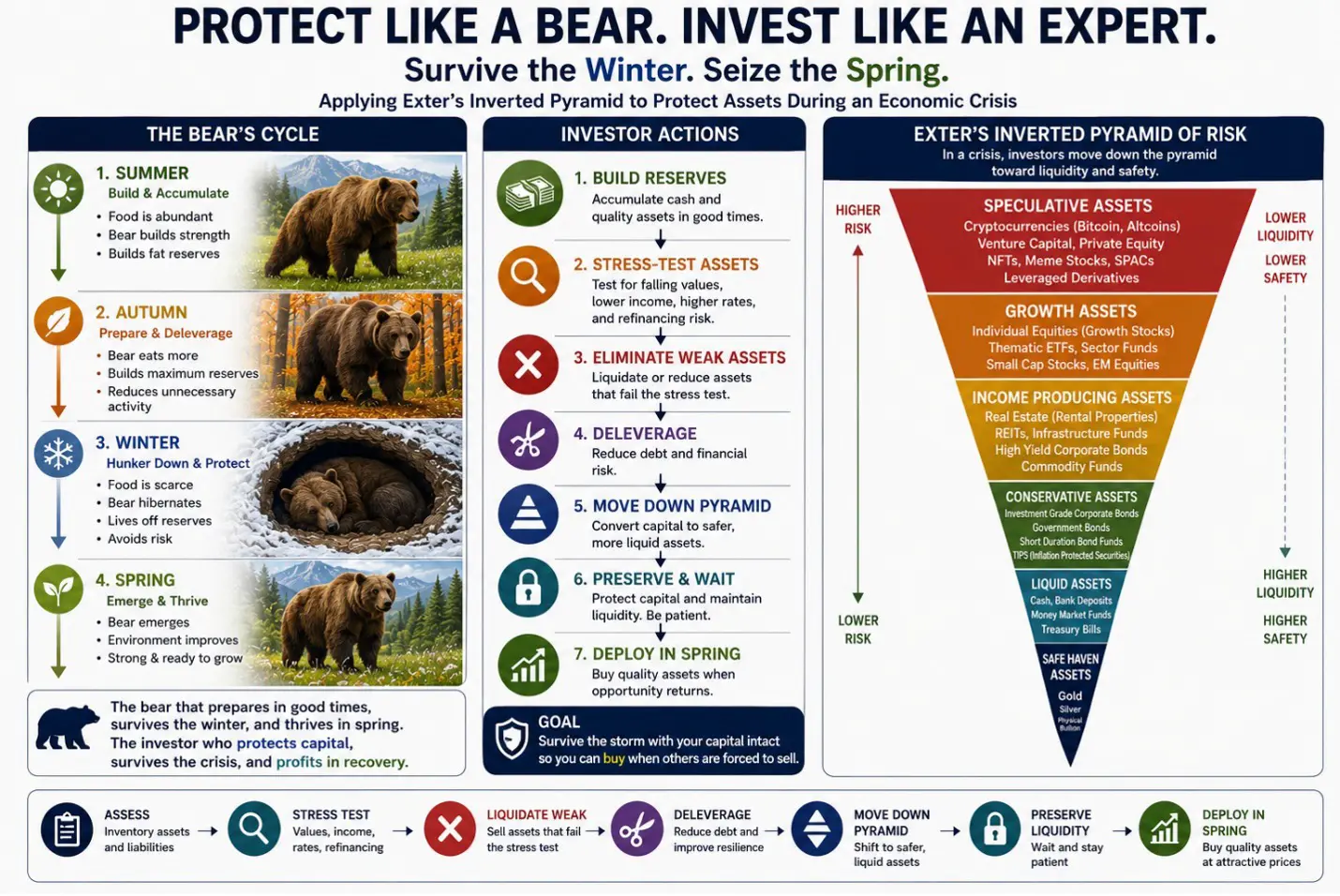
This is where John Exter’s Inverted Pyramid provides a useful framework for thinking about asset protection. A simple way to understand the principle is to think about a bear preparing for winter. During summer, food is abundant. The bear does not assume that conditions will remain favorable forever. It builds reserves, strengthens itself and prepares for a period when food will become scarce. When winter arrives, it retreats to safety and lives off what it accumulated.
Investors should think the same way. Prepare Before winter.
During good economic conditions, investors should examine every major asset and ask a simple question: Can this asset survive an economic winter?
Every property, business, equity investment and leveraged position should be stress-tested against falling asset values, declining income, rising interest rates and tighter refinancing conditions. For example, imagine a $50 million property financed with $30 million of debt. If the property falls 20% to $40 million, the owner’s equity falls from $20 million to $10 million, a 50% reduction in equity.
If you add to this a rise in interest rates and a decline in rental income, the asset may still be fundamentally valuable, but the financing structure could make it unsustainable. This is when the assets start becoming a financial burden to investors and the worst time to sell an asset during a downturn, when there aren’t enough buyers and you are forced to sell at deep discounts to prevent further destruction of wealth.
That is the real purpose of a stress test: to identify the assets that could force you to sell during a crisis. Eliminate Weakness Before Winter. Assets that fail the stress test should not simply be carried forward and hoped to recover. They should be reconsidered. The right approach may be to refinance, reduce leverage, inject additional equity or, where necessary, liquidate the asset while markets are still liquid.
This is similar to the bear preparing for winter. It does not wait until food disappears before preparing its reserves. For the investor, selling a vulnerable asset before the crisis may be far better than being forced to sell it after its value has collapsed. The proceeds can then be moved toward the lower-risk and more liquid portion of Exter’s Inverted Pyramid.
Moving Down the Pyramid
Exter’s framework illustrates a progression from higher-risk, less-liquid assets toward increasingly liquid and defensive assets. During periods of increasing financial stress, investors may move away from speculative and highly leveraged investments toward more liquid assets such as cash, short-duration government securities and, depending on the circumstances, precious metals and other perceived safe havens. The objective is not necessarily to eliminate risk completely. It is to reduce the probability of forced selling and preserve optionality.
Survive Winter
Deleveraging is therefore not simply about accepting lower returns. It is about protecting the balance sheet. An investor with manageable debt and substantial liquidity can wait. An investor with excessive debt may have no choice but to sell. The bear survives winter because it has reserves. The investor survives a crisis for the same reason: liquidity buys time.
Seize the Spring
The purpose of preparation is not to remain defensive forever. When the economic winter eventually passes, distressed assets can become attractive. The investor who protected capital, reduced leverage and preserved liquidity can move back up the risk pyramid and acquire quality assets when others are forced to sell.
The cycle is therefore simple:
Build reserves. Stress test assets. Eliminate weakness. Deleverage. Move toward liquidity. Survive the winter. Then deploy capital when spring arrives. The bear does not fear winter. It prepares for it. The investor who prepares before the storm can do more than survive the crisis; they can emerge with the liquidity and strength to take advantage of the opportunities the crisis creates.