Perspective
Loud vs. Quiet
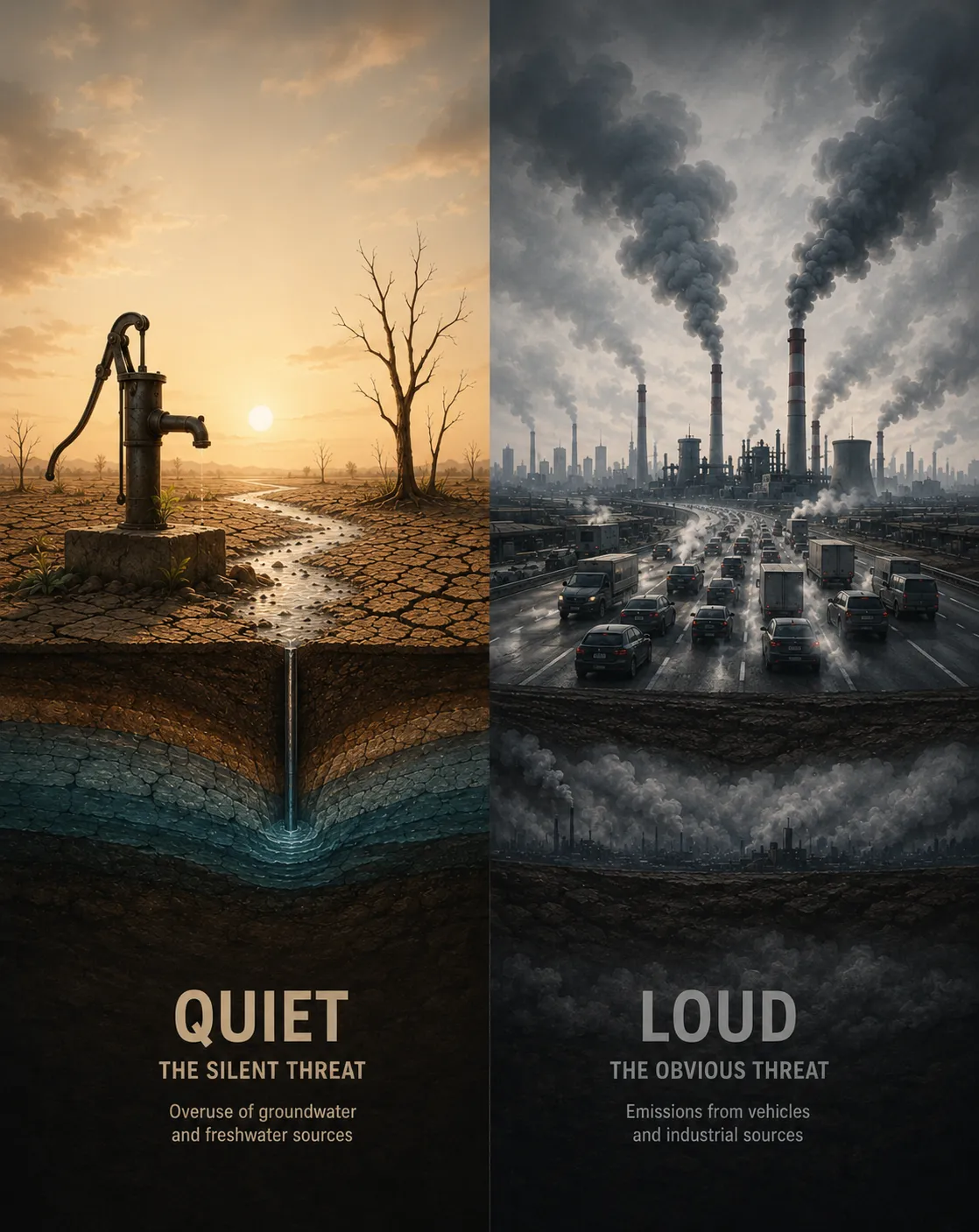
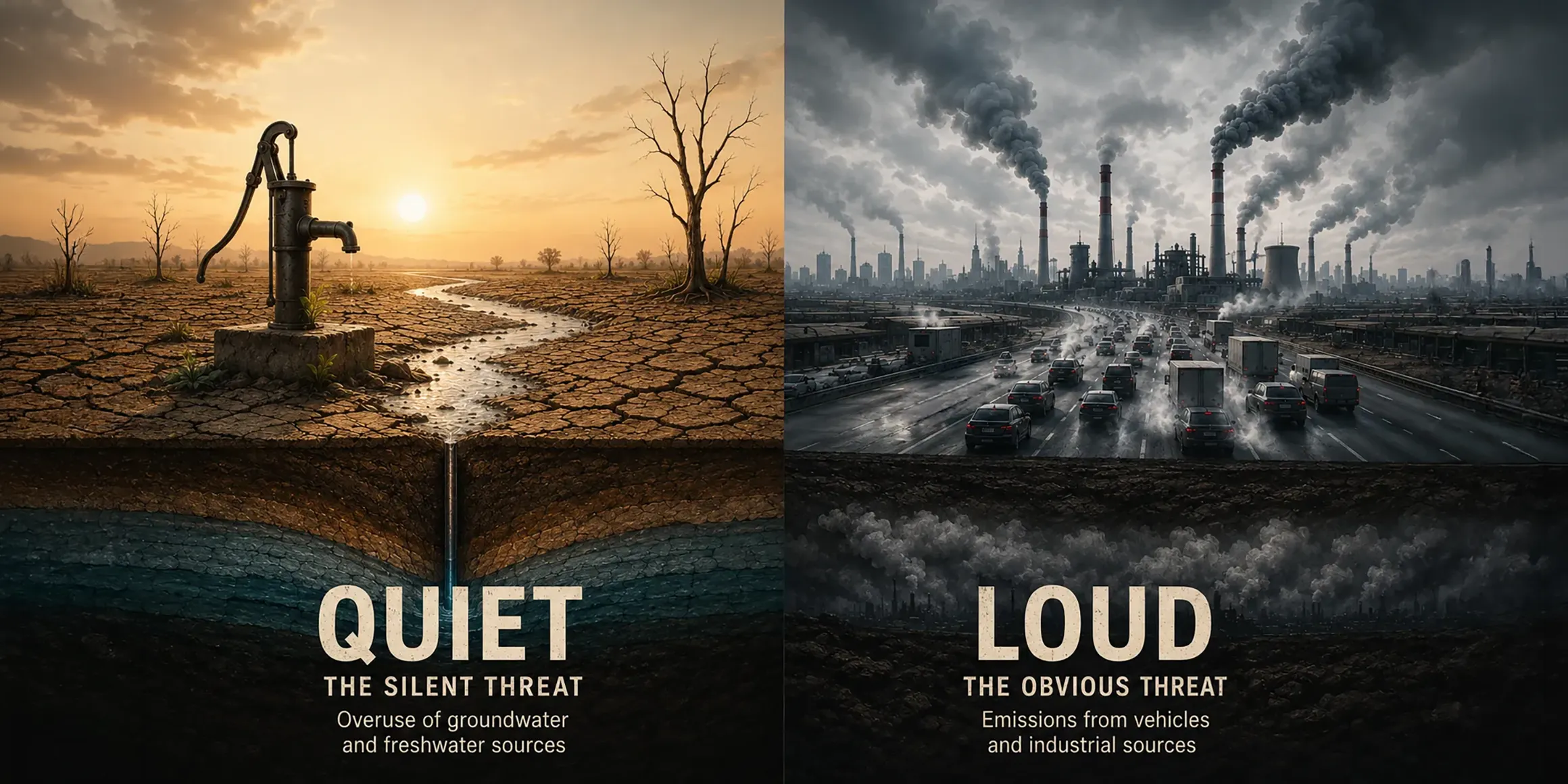
Human nature is naturally reactive. We respond to what is loud, visible, and urgent. We hear the alarm, see the smoke, and rush to solve the problem. Yet history shows us that the greatest threats rarely begin with noise. They begin quietly, growing stronger while our attention is fixed elsewhere.
Climate change is a powerful example.
When people think of climate change, they picture the loud ones: vehicles, factories, aircraft, and power plants emitting carbon dioxide. They dominate headlines, policy discussions, and public debate. Reducing emissions is essential, but it is often a reaction to damage that is already visible.
Meanwhile, another crisis unfolds almost unnoticed beneath our feet. Around the world, groundwater is being extracted faster than nature can replenish it. Rivers shrink, wetlands disappear, soils dry out, and ecosystems lose their ability to regulate temperature. Unlike smokestacks, depleted aquifers make no noise.
Yet these quiet water systems are among Earth’s greatest climate assets. Groundwater sustains rivers, lakes, wetlands, and forests that naturally cool the planet through evaporation and support biodiversity. Many wetlands also serve as some of the world’s most important long-term carbon stores, holding nearly 30% of the world’s land-based carbon despite covering only a small fraction of the Earth’s surface. When these ecosystems dry, they not only lose their cooling effect but can also begin releasing carbon that has been stored for centuries. Protecting water is therefore not simply water management, but also proactive climate action.
The Same Principle Applies to Human Health
We react immediately to heart attacks, accidents, and severe infections because they are loud and demand attention. Yet many of the world’s leading causes of death begin in silence. High blood pressure, Type 2 diabetes, chronic kidney disease, fatty liver disease, and many cancers often develop for years before symptoms appear. By the time they become obvious, significant damage may already have occurred. Modern medicine increasingly recognizes that prevention, early screening, and healthy lifestyles are far more effective than treating advanced disease. The healthiest societies are proactive rather than reactive. Could the pollution and contaminants seeping into our drinking water also be a cause of the health problems increasing around us?
Business Follows the Same Pattern
Organizations often notice the loudest voices, the people who dominate meetings and seek attention. Yet lasting success is usually built by quieter individuals who solve problems, improve systems, maintain quality, and consistently deliver results. Great leaders understand that sustainable organizations are built by recognizing and empowering these silent contributors before their value is overlooked.
Across climate, health, and business, the lesson is the same. Reactive thinking focuses on loud symptoms after they appear. Proactive thinking identifies quiet signals before they become crises. It invests in prevention instead of recovery, resilience instead of repair, and foresight instead of urgency.
The loudest problems may capture our attention, but proactive action on the quietest forces often determines our future stability and sustainability.