Climate
The Great Atlantic Scar: Is It a Blessing in Disguise?
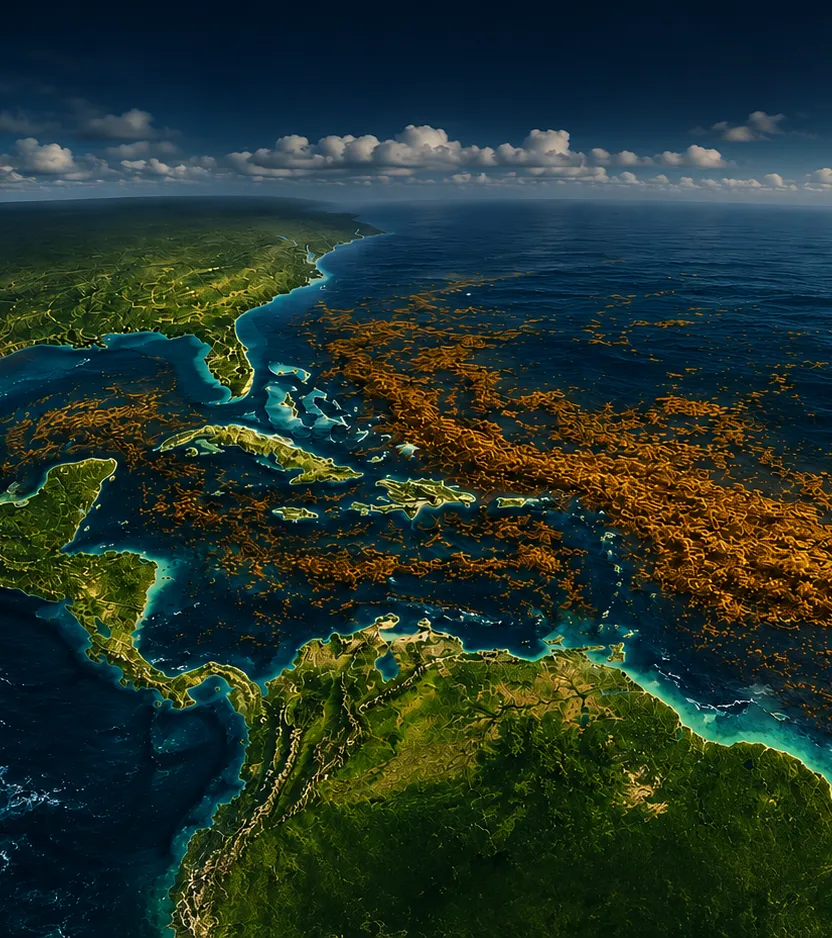
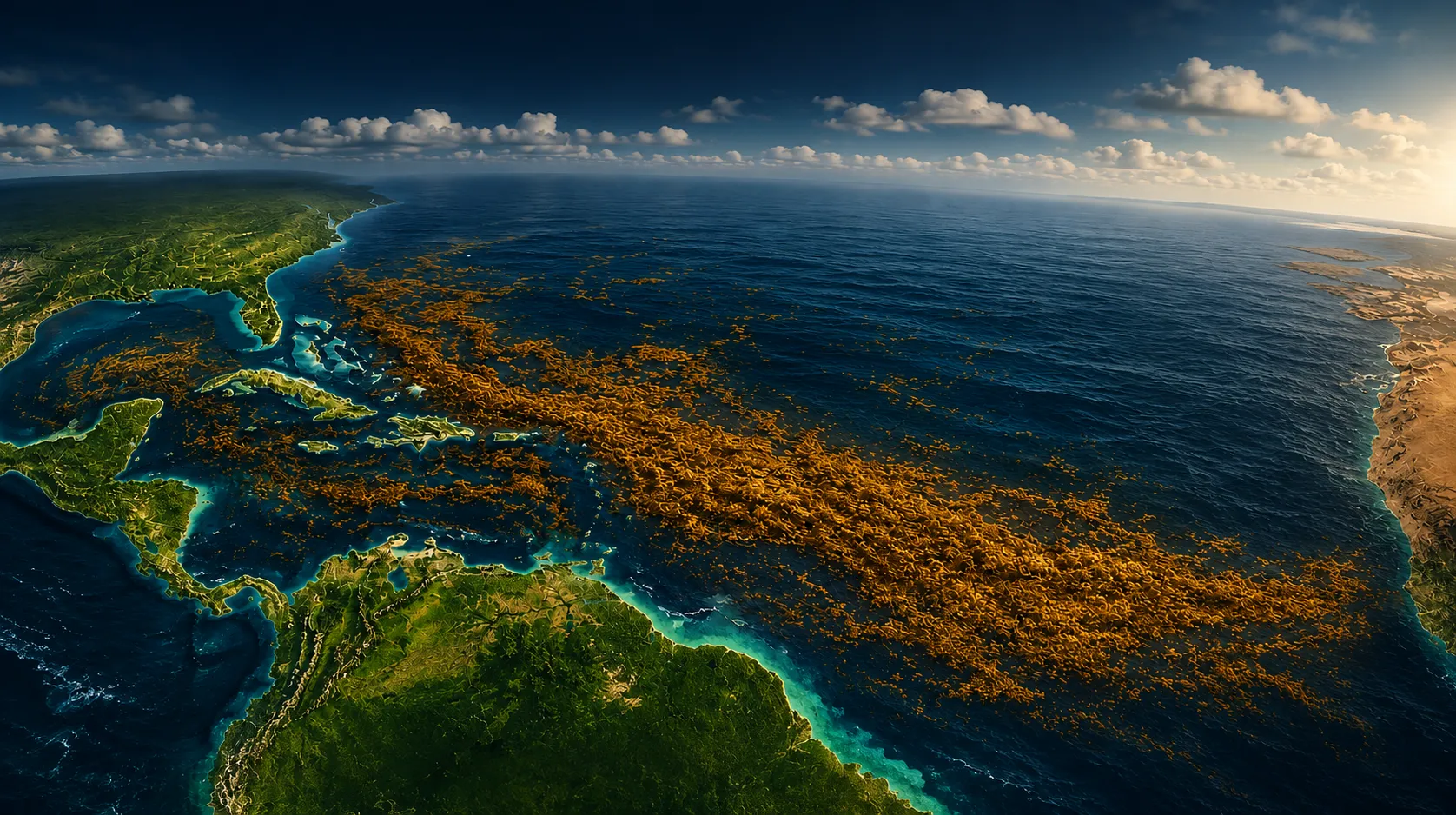
In 2011, something remarkable emerged in the Atlantic Ocean: a vast, persistent belt of floating sargassum stretching from West Africa across the tropical Atlantic to the Caribbean and Gulf of Mexico. Before then, no such continuous trans-Atlantic phenomenon had been observed in the satellite era.
Over the past fifteen years, this floating ecosystem has grown into one of the largest biological features on Earth. Scientists attribute its growth to a combination of increased nutrient runoff, warming sea temperatures, favourable ocean currents and changing climate conditions. Yet beyond these physical drivers lies a fascinating question.
Could the Atlantic be responding to environmental stress in much the same way a human body responds to injury?
When our skin is damaged, the body rapidly forms scar tissue. It happens not because it is perfect, but because it is the fastest way to restore balance. Likewise, the Great Atlantic Sargassum Belt may represent an adaptive response by an ocean experiencing increasing environmental stress.
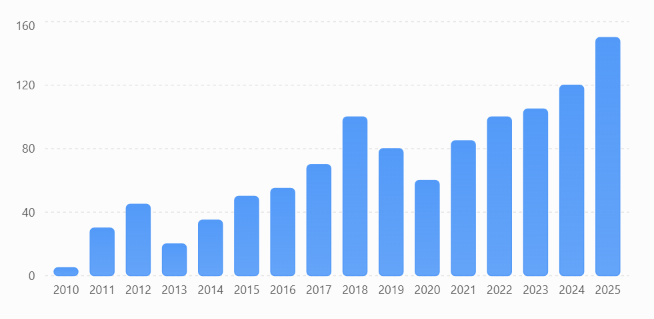
Satellite observations reveal a remarkable long-term increase in sargassum biomass. While the bloom varies from year to year, the overall trend has been strongly upward. Peak biomass increased from negligible levels before 2011 to approximately 20 million metric tonnes in 2018, and around 37.5 million metric tonnes in 2025, the largest bloom recorded to date. As it grows, it naturally fixes millions of tonnes of carbon from the atmosphere through photosynthesis into its structure.
Like many complex systems, the growth has not been perfectly linear. Periodic declines have been followed by renewed expansion, producing a pattern of growth, correction and recovery similar to that observed in many ecological and economic systems.
Do you see a correlation to economic activity cycles in the graph?
An Ocean’s Scar Tissue
The analogy between scar tissue and the Great Atlantic Sargassum Belt is not meant literally but conceptually.
When a human body suffers a wound, it rapidly produces collagen-rich scar tissue to stabilise and protect the damaged area. The resulting tissue differs from healthy skin, yet it represents the body’s fastest available repair mechanism.
Similarly, over the past century the Atlantic has absorbed vast quantities of anthropogenic carbon dioxide while also experiencing increased nutrient runoff, warming waters and changing circulation patterns. These conditions have created an environment in which sargassum thrives.
Like scar tissue, the expanding sargassum belt may represent an adaptive ecological response, imperfect but protective, capturing carbon through photosynthesis while providing habitat for countless marine organisms.
The micro-organisms, shellfish and phytoplankton that thrive in it fix a huge amount of carbon daily, and when they die, their shells sink to the bottom of the ocean, locking away excess carbon for centuries.
A Blessing Offshore, A Burden Ashore
Far from land, floating sargassum supports an extraordinarily rich ecosystem. Fish, turtles, crabs and countless invertebrates rely on these floating forests for shelter and food.
However, once winds and currents push millions of tonnes ashore, the ecological benefits are accompanied by substantial human costs.
Across the Caribbean, Mexico and parts of West Africa, beaches are buried beneath decomposing seaweed. Hydrogen sulphide and ammonia released during decomposition produce a strong odour and can contribute to respiratory irritation. Tourism declines, fishing operations are disrupted, governments spend millions on cleanup, and coastal ecosystems, including coral reefs and turtle nesting beaches, are affected.
This mirrors the paradox of scar tissue. A scar protects the body, yet excessive scar formation can restrict movement and create long-term complications.
A Window of Opportunity
The question to be asked is this: if this is nature’s way of fixing an issue, can we give a helping hand to speed the process along, and at the same time prevent it from becoming a burden on shore?
The best solutions are those already proven in nature, accelerated to balance the rate at which carbon is released.